

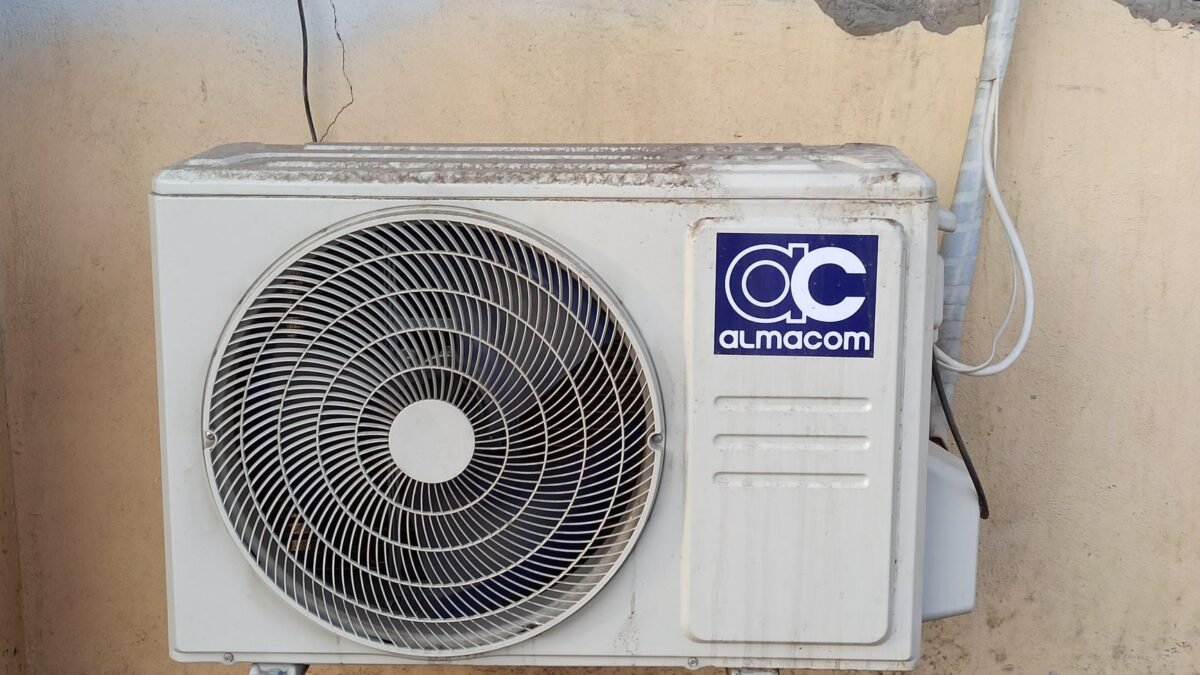
Mini split vs central air is a question many homeowners face when replacing equipment, adding a room or trying to fix a space the existing system never heats or cools well. Central air uses one large system and a network of ducts to serve the whole house. A ductless mini split uses an outdoor heat pump connected by small refrigerant lines to one or more indoor units mounted in individual rooms, with no ducts at all.
This guide compares the two on seven key differences, including cost, efficiency, comfort and installation, and explains when a mini split is the smartest fix.
Key takeaways
- Mini splits avoid duct losses entirely and let each room or zone set its own temperature.
- Central air is usually cheaper per square foot for whole homes that already have good ducts.
- A single-zone mini split is often the best fix for additions, bonus rooms, sunrooms and garages.
- Mini splits are heat pumps, so they heat as well as cool; cold-climate models work in freezing weather.

In this guide
How each system works
Central air has an outdoor condenser (or heat pump) and an indoor coil at the furnace or air handler. A blower pushes conditioned air through supply ducts to every room and pulls it back through returns.
Ductless mini splits have an outdoor heat pump connected through a small hole in the wall to one or more indoor “heads,” usually mounted high on a wall, on the ceiling or in a floor console. Each head has its own fan and is controlled separately. Ducted mini split air handlers also exist for short duct runs.
7 key differences
1. Duct losses
Central systems lose energy through their ducts. ENERGY STAR estimates typical homes lose 20 to 30 percent of duct airflow to leaks, and ducts in attics also gain or lose heat through their walls. Mini splits deliver air directly into the room, avoiding those losses. The Department of Energy notes that ductless heat pumps avoid the distribution losses associated with central systems that have leaky ducts in unconditioned spaces.
2. Zoning and comfort
Every mini split head has its own thermostat, so you can heat or cool only the rooms you use, and each room gets exactly the air it needs. Central air treats the house as one zone unless you add zoning dampers and extra thermostats.
3. Efficiency
Mini splits use inverter-driven compressors that ramp up and down smoothly rather than switching fully on and off. Many models have high SEER2 and HSPF2 efficiency ratings. Central heat pumps with variable-speed compressors can also be very efficient; single-stage central units are generally less so.
4. Upfront cost
| Project | Typical installed cost |
|---|---|
| Single-zone mini split (one room) | $3,000 – $6,000 |
| Multi-zone mini split (3 – 5 rooms) | $8,000 – $20,000+ |
| Central AC replacement with existing ducts | $5,000 – $12,000 |
| Central system plus new ductwork | $10,000 – $20,000+ |
Ranges vary widely by region, efficiency and brand. Whole-house mini split systems often cost more than central replacements when good ducts already exist; single rooms are often cheaper with a mini split than extending ducts.
5. Installation and disruption
Mini splits need only a small wall penetration for refrigerant lines and a condensate drain. Installation usually takes a day or two. Adding or replacing ducts for central air can mean opening walls and ceilings.
6. Air filtration and humidity
Central systems use one large filter that can be upgraded to MERV 11 to 13 or a deep media filter. Mini split heads have washable mesh filters that catch larger particles but not fine ones, and they need cleaning regularly. Both dehumidify while cooling; inverter mini splits can be good at it because they run longer at low speed.
7. Appearance and noise
Wall-mounted heads are visible, which some homeowners dislike; ceiling cassettes and ducted units are less obvious. Mini split indoor units are typically very quiet. Central systems hide equipment in closets and attics but can be noisier at registers if ducts are restrictive.
Comparison table
| Mini split | Central air | |
|---|---|---|
| Ducts | None (or short) | Full duct system |
| Duct losses | None | Can be 20–30% or more |
| Zoning | Built in per head | Requires zoning add-on |
| Filtration | Washable mesh filters | MERV 8–13 or media filter |
| Best for | Additions, problem rooms, homes without ducts | Whole homes with good ducts |
| Installation | Minimal disruption | Easy if ducts exist; major if not |
| Look | Visible indoor heads | Hidden equipment, registers only |
When a mini split is the best choice
- Additions, bonus rooms and finished attics that the central system can’t reach well.
- Rooms over garages or sunrooms with very different heating and cooling needs. See one room hotter than others.
- Homes without ductwork, such as older homes with radiators or baseboard heat.
- Garages, workshops and home offices used at different times.
- Homes with bad ducts in hot attics, where replacing them would be expensive.
When central air is the better choice
- Your home already has well-sealed, properly sized ducts.
- You want whole-house filtration with MERV 13 or a media filter.
- You prefer hidden equipment and registers only.
- You’re replacing like-for-like and the ducts test well.
The hybrid approach
Many homes do both: keep the central system for the main living areas and add a single-zone mini split for the one space it can’t handle. This often costs far less than redesigning ducts, and it reduces the load on the central system. Before choosing, seal and test the existing ducts; see duct leakage test.
Size it properly. Mini splits work best when sized to the room’s actual load. Oversized heads short-cycle and dehumidify poorly. Ask for a room load calculation, and use our AC size calculator as a rough check.
Rebates and incentives
Heat pumps, including many mini splits, often qualify for utility rebates and, in recent years, federal tax credits for high-efficiency equipment. Programs change, so check your utility and current federal guidance before buying.
A worked example
A family’s bonus room over the garage hits 85°F on summer afternoons while the rest of the house is 74°F. A contractor quotes $6,500 to add a larger duct run and a second return, with no guarantee given the long attic path. A single-zone 12,000 BTU mini split costs $4,200 installed. They choose the mini split. The bonus room now holds 73°F independently, and the central system no longer runs overtime trying to cool it.
Cost comparison
| Ductless mini split | Central air (with existing ducts) | |
|---|---|---|
| Single room | About $3,000 to $6,000 | Not practical |
| Whole home | About $8,000 to $20,000+ | About $5,000 to $12,000 |
| Efficiency | Often very high, no duct losses | Depends on duct condition |
Costs vary widely by region, brand and number of zones. Rebates and tax credits may apply for efficient heat pumps.
Choosing between them
A mini split is usually the better choice for additions, garages, bonus rooms and homes without ductwork. Central air makes sense when good ducts already exist. In many homes a hybrid approach works best: central air for most of the house and a mini split for problem rooms.
Mini split vs central air: FAQ
Are mini splits cheaper to run than central air?
Often, especially when they replace leaky ducts or let you condition only occupied rooms. Results depend on efficiency ratings and how you use them.
Can mini splits heat a house in winter?
Yes. They’re heat pumps; cold-climate models are designed to heat effectively in freezing temperatures.
Do mini splits need ductwork?
Ductless models don’t. Some ducted mini split air handlers use short duct runs to serve a few rooms.
How long do mini splits last?
Typically 15 to 20 years with regular maintenance, similar to central heat pumps.
Do mini splits filter air well?
Their mesh filters catch larger particles. For fine particles, central systems with MERV 13 filters or portable HEPA purifiers do better.
The bottom line
In the mini split vs central air decision, central air makes sense for whole homes with good ducts, while ductless mini splits shine where ducts are missing, leaky or can’t reach, and for rooms with very different needs. For many homes, the smartest move is keeping central air and adding a mini split for the problem room. For efficiency guidance, see ENERGY STAR’s heating and cooling advice.